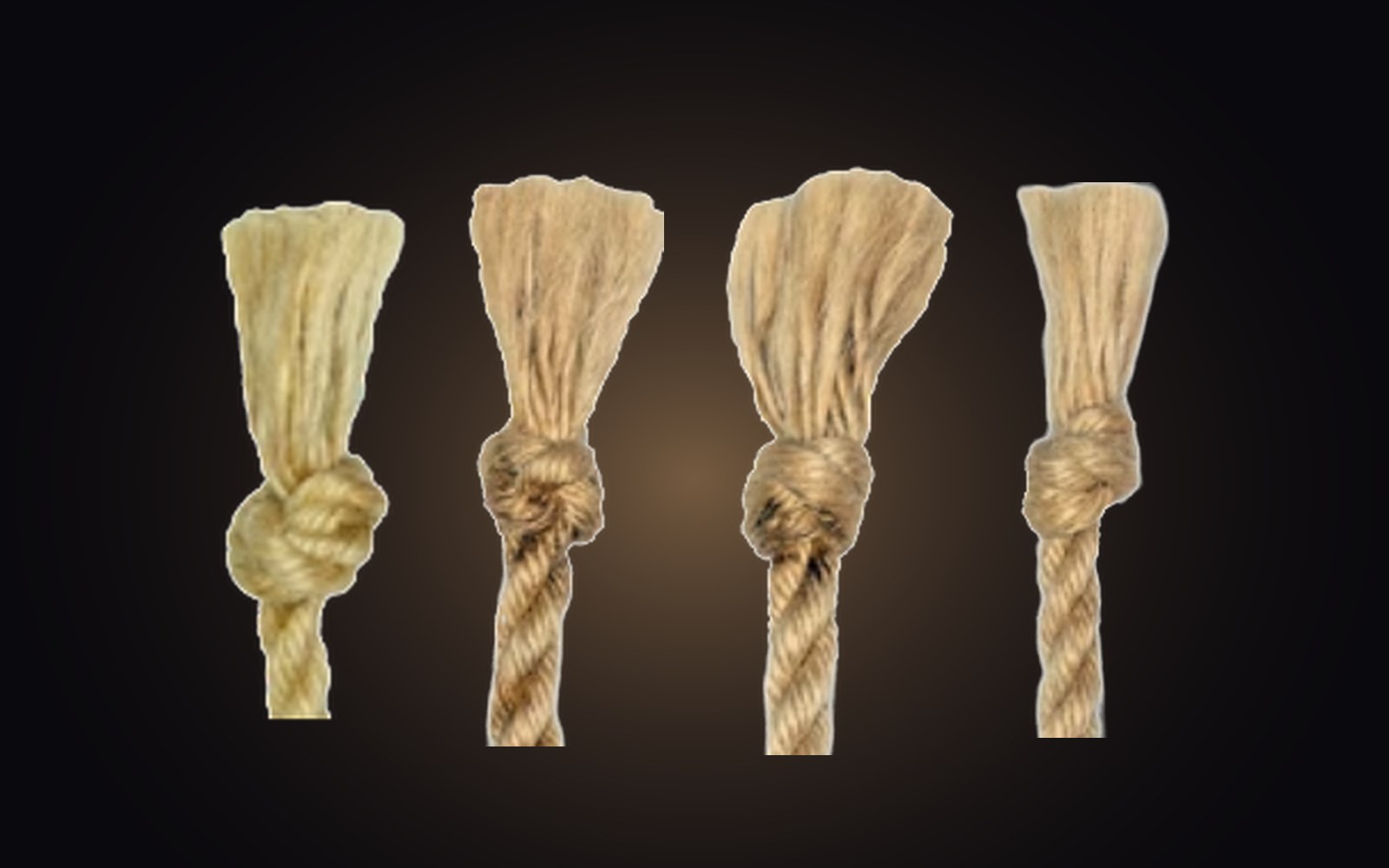
Shibari end knots
A stopper knot keeps your rope from unravelling and gives you a clear end to work with. Which knot you choose decides how smoothly you work later.
There are two categories of end knot: single strand and multi strand.
Single strand stopper knots are tied without unravelling the rope first. They are easier to tie and to undo, and they also work themselves loose over time.
Multi strand stopper knots are permanent in practice. Once tied they stay. They are harder to tie and considerably smaller.
Single strand end knots
The most used options, from simple to sturdy.
- Overhand knot. The most used end knot in shibari and the smallest of all single strand knots. Reasonably easy to undo and retie. The drawback: it works itself loose and needs tightening now and then.
- Double overhand knot. A little larger and firmer than the plain overhand.
- Figure of eight knot. Larger and very stable.
- Barrel knot. The largest of the four, decorative and functional.
In practice the overhand knot is the only workable single strand choice for shibari. All the others add volume that has to pass under the wraps, and more volume means less smooth work.
Multi strand end knots
These knots are tied by separating the strands of the rope first. They are smaller and firmer than single strand knots, and you will not get them undone again.
- Thistle knot. Similar in size to the open overhand, more decorative, and my own choice.
- Matthew Walker knot. Popular with some riggers for its looks, and longer than the other two. Its only advantage over the open overhand or the thistle is visual.
- Open overhand knot. The simplest multi strand option. Small and functional.
The two main advantages of multi strand over single strand: they are smaller, and they hold more firmly.
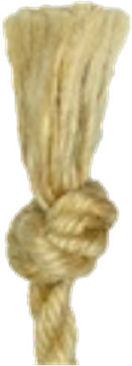
Overhand
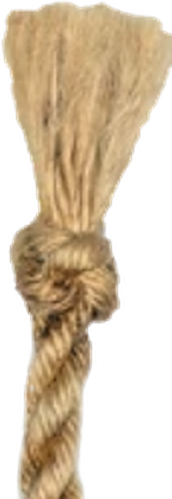
Thistle
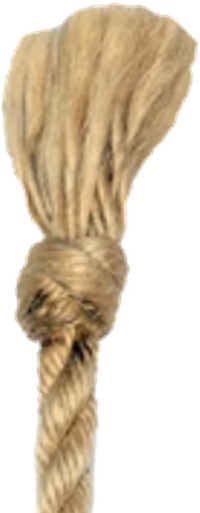
Matthew Walker
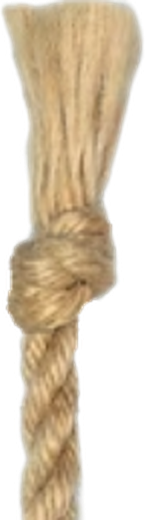
Open overhand
What I use myself
I finish my ropes with a thistle knot. Small enough to run smoothly under wraps, permanent, and there is something to look at.
More about rope and material is on shibari rope. If you want to learn it with your hands, have a look at learning shibari or in the shop, where the ropes come finished by hand.