What is shibari?
The art of connection through rope.
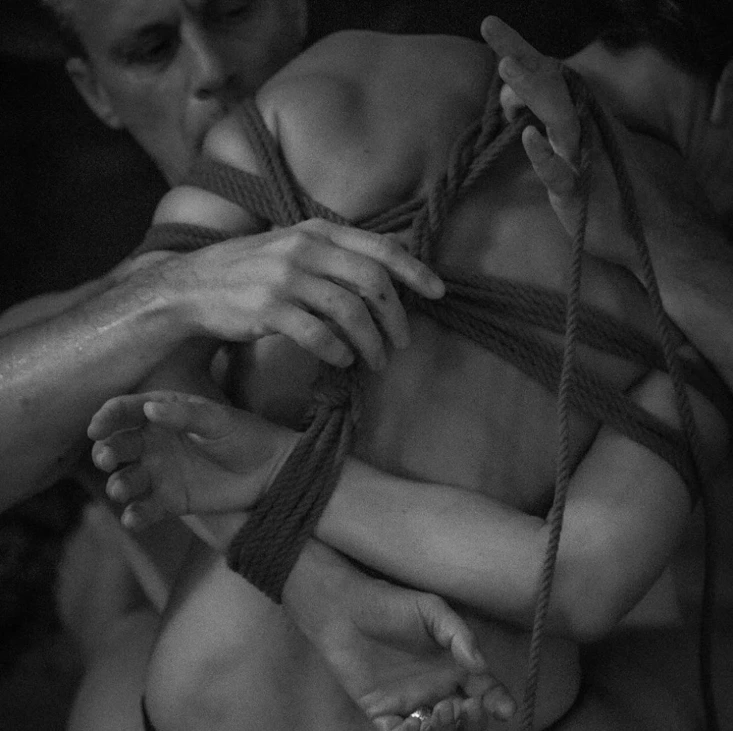
Shibari is the art of binding with rope. The word comes from Japanese and literally means "to bind." In practice, it refers to a way of working with rope where connection, trust, and presence are central.
It is not a trick that you learn and then "can" do. It is a conversation between two people, conducted with the hands, the rope, and the body. One binds, the other is bound. Both are active, both are present.
In my workshops and sessions, I combine shibari with principles from tantra: conscious contact, attention to what is happening in the body, and the willingness to surrender to the moment. Not to pain, not to coercion, but to the safety that arises when two people truly pay attention to each other.
Shibari, kinbaku, and the Japanese origin
Shibari has its roots in Japan. The predecessor, hojojutsu, was a military technique used by samurai to bind prisoners. In the twentieth century, that technique transformed into kinbaku: an aesthetic and relational art form.
The difference between shibari and kinbaku is subtle. Kinbaku (literally "tight binding") specifically refers to the Japanese art form with its aesthetic principles: asymmetry, tension, the line of the rope over the body. Shibari is the broader, internationally used term.
I use "shibari" because it is more accessible, but the intention behind my work is that of kinbaku: conscious, attentive, with an eye for beauty and connection.
Do you want to know the full history? Then read From Hojojutsu to Kinbaku: the history of shibari.
Who is shibari for?
Shibari is for anyone who is curious about a different way of touch and connection. You don't need to have experience, you don't need to be flexible, you don't need to be in a relationship.
In my workshops, I see couples who want to deepen their intimacy. But also singles who are curious. People coming from yoga or meditation who find recognition in the attention to the body. People who just want to give it a try.
There are no wrong reasons to start, as long as you are willing to be present openly and respectfully.
The many faces of shibari
Anyone who googles "shibari" usually finds images from the same angle: handcuffs, leather straps, a bedroom. Shibari as an erotic bondage technique for private use. That version exists. But it is just one face of something that is much broader.
Erotic shibari. Yes, shibari is practiced as an intimate practice between partners. There is nothing wrong with that. The rope can be a way to bring playfulness, tension, and surrender into a relationship. Many people discover shibari through that entry point, and that is a completely valid reason to start.
Therapeutische shibari. Dit is misschien het minst bekende gezicht, en het gezicht dat mij het meest raakt. Er zijn mensen die moeite hebben om iets los te laten. Die vastzitten in hun hoofd. Die moeite hebben om te voelen. Soms zelfs mensen met chronische pijn door spanning in het lichaam. Voor hen kan het touw iets doen wat andere practices niet doen.
The nervous system recognizes boundaries. Pressure that is present, predictable, without judgment. For people with chronic pain, neurodiverse processing, or a body that has difficulty calming down, that can be an entry point that yoga, meditation, or massage do not provide.
Shortly after a workshop, I received a message from a participant. She had a long background in body-oriented practices: acroyoga, dance, massage, tantra, contact improv, acupuncture, singing, trapeze, surfing. She knew exactly what they did for her. But there was always something missing.
Over shibari schreef ze: "Shibari lijkt er zoveel te dragen, en zich daar bewust van te zijn."
She also shared something concrete. She has chronic pain. The first hours of the day are tough, her legs hurt a lot. She started binding her legs every morning after the workshop, and wrote: "Instead of feeling crazy discomfort, I can breathe better than any other time."
That is not a minor issue. That is exactly what it is about.
She was also honest about the taboo: "Part of me also doesn't find it super easy to talk about, since there are many taboos, misconceptions, different kinds." I recognize that in many people. The language around shibari has largely been hijacked by one narrative: kink, aesthetics, taboo. Those who experience something different often still lack the words for what it is. Finding those words is also part of the work.
Shibari as an art form. Shibari can be purely aesthetic: the rope as line, the body as canvas, the knot as a compositional element. A nice example is the Art of Ropes series, in which, among other things, the Cleopatra harness is demonstrated. That kind of work shows that shibari can be close to visual art and performance.

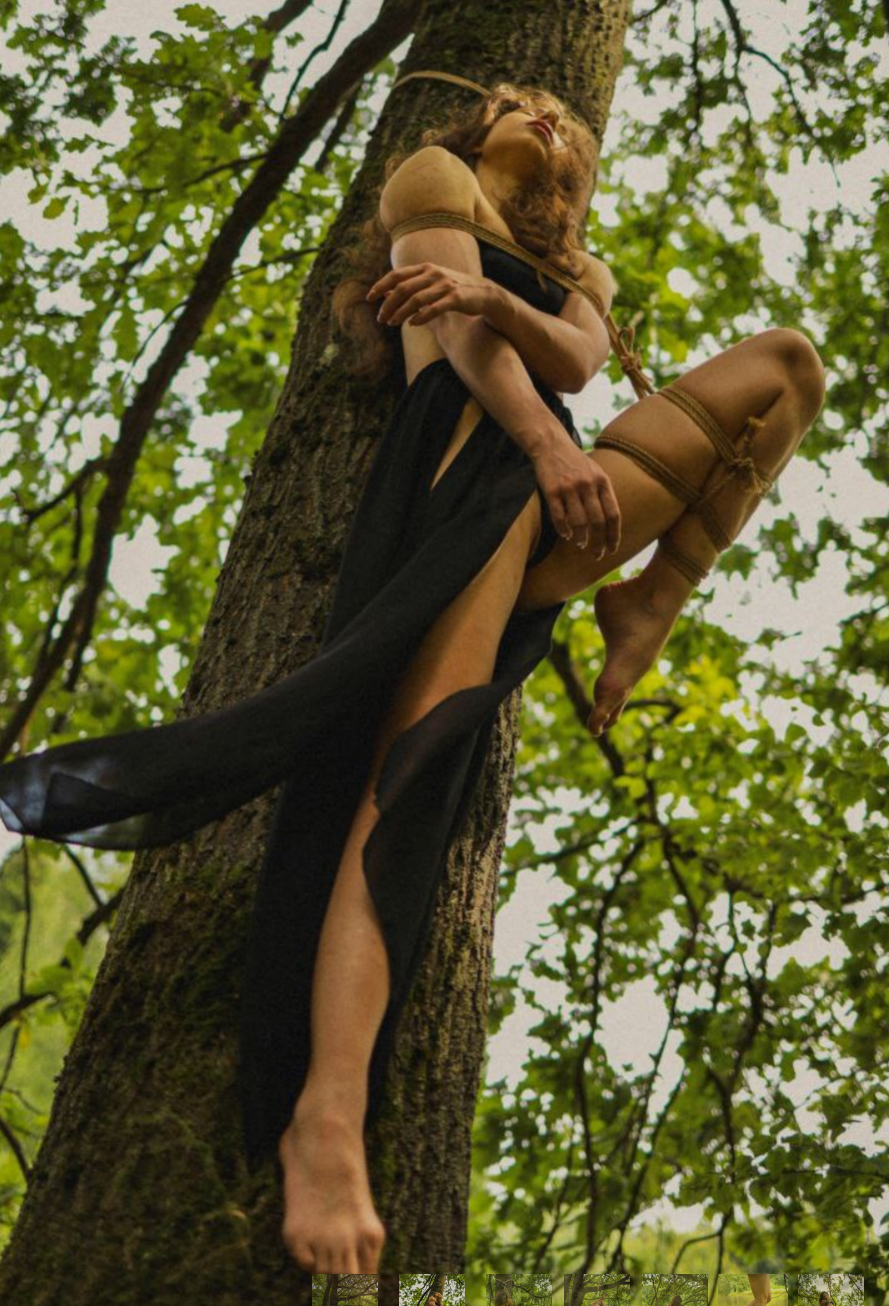
Shibari in nature and as a display. There is also an exhibitionistic side to shibari. People who bind outside, to a tree in the woods, as a conscious confrontation with shame, vulnerability, and the gaze of the other. In my shadow tantra sessions we work with that layer: the dark, uncomfortable side that comes with it.
Kink and BDSM. Shibari has historical and current connections with kink. Power dynamics, surrender to pain, erotic tension. That is a conscious choice of the practitioners, and it is not for me to judge. I write more about it on the page Kink and the darker sides of tantra.
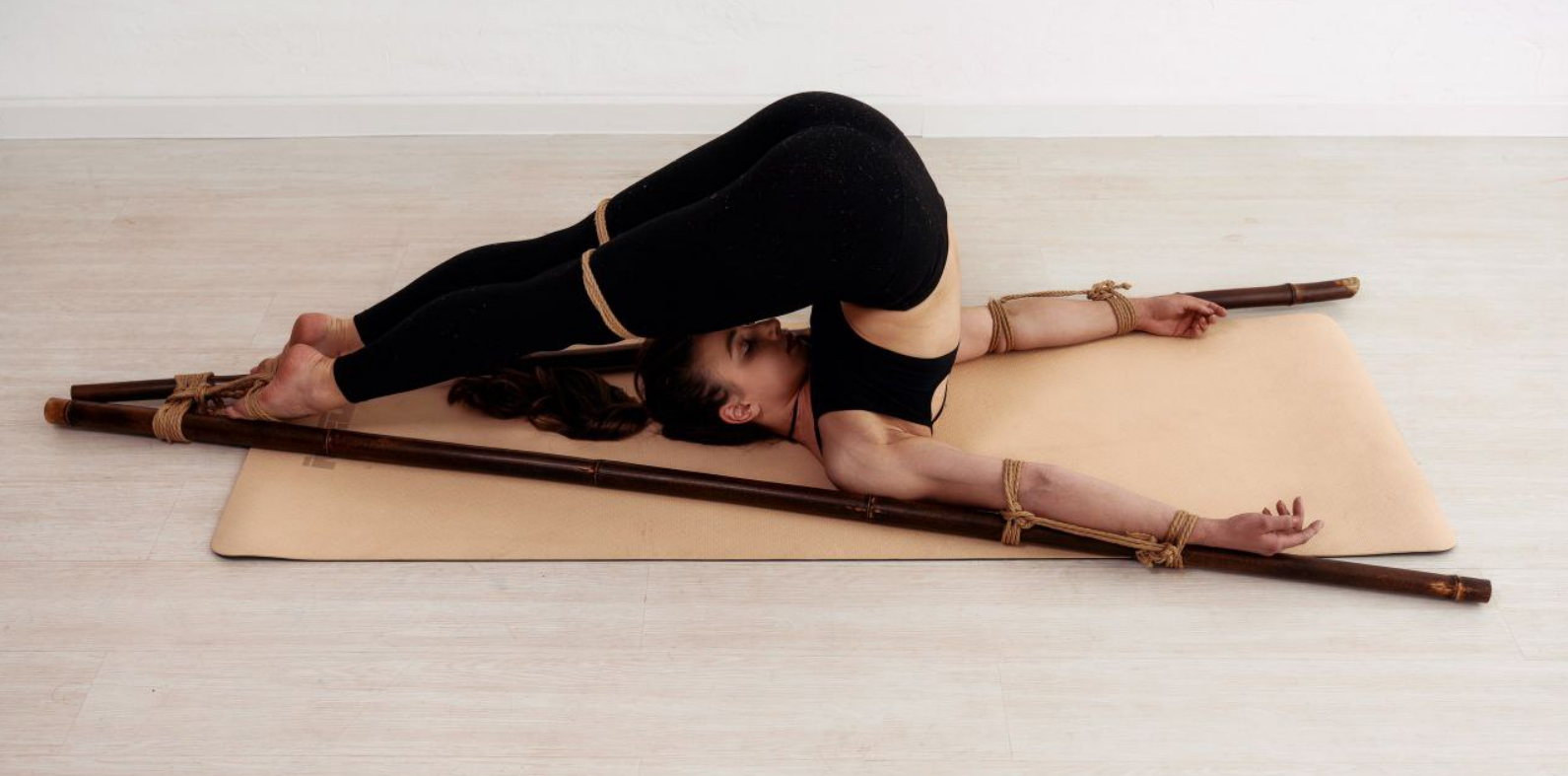
Advanced shibari and the risk. Finally, there is the advanced, sometimes risky shibari that you see at exhibitions and in performances. Models are tied up at vulnerable places on the body, sometimes in suspension. I strongly advise against this in 99% of cases. The risk of nerve damage is too great. This kind of work requires years of experience, in-depth anatomical knowledge, and a trust bond between rigger and model that cannot be established in just a few workshops.

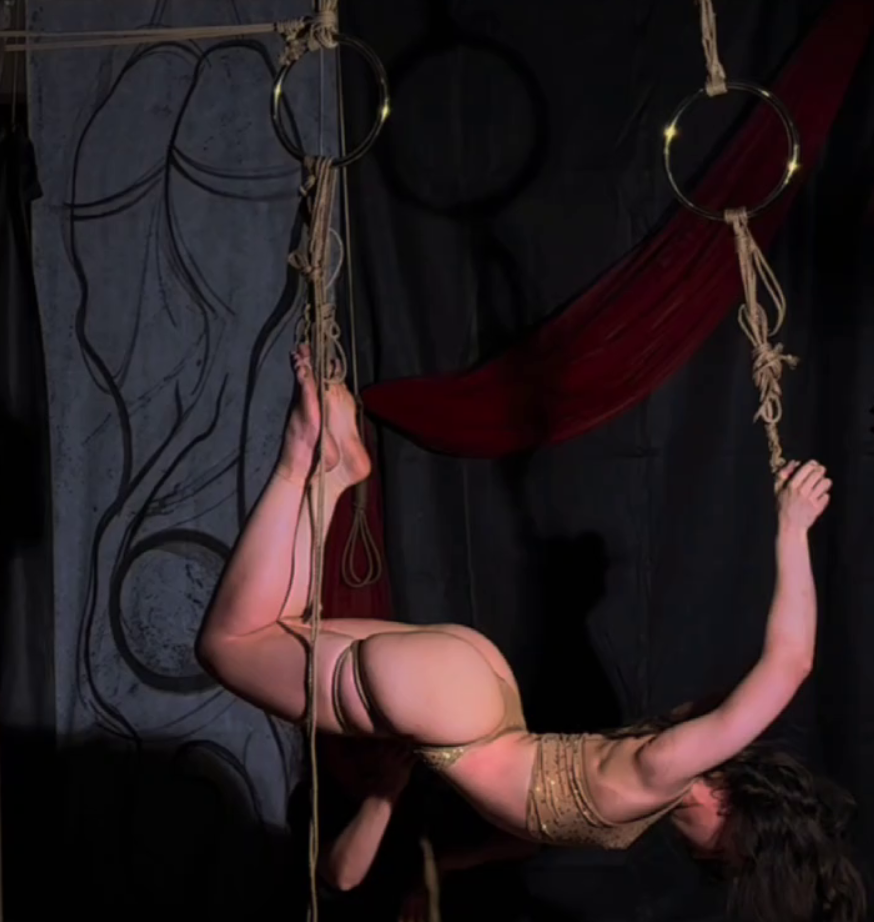
Each of these faces is real. None of them tells the full story. What they share is the rope, and the invitation to be present with what is happening.
Shibari and tantra: why I combine both
Tantra and shibari share a core: presence in the body, attention to the connection with another, and the willingness to go beyond the known.
In the tantric tradition, surrender is not a weakness. It is a conscious choice to let go of control and trust in what is. The rope makes that tangible. It provides a framework, literally, within which that surrender can grow.
In my work, shibari and tantra are not two separate things that I combine. They enhance each other. The rope brings the tantric principles to the body. The tantra gives the rope practice depth and direction.
Read more about this connection at Shibari and Tantra.
How do you start with shibari?
The best way to start is by experiencing it. Reading helps to understand what it is, but you learn shibari with your hands and your body.
Free introduction in Ghent. Every month I organize a free introductory workshop at Freefall in Ghent. You only pay a contribution for the room costs. These workshops are always fully booked (about 20 participants), so sign up in time.
Private lessons in Eke. If you want to learn more specifically, I offer private lessons with a technical structure in three levels (L1, L2, L3). Here we go deeper into specific knots, patterns, and the fine motor skills of binding.
Shibari for couples. Do you want to start together with your partner? That’s possible. Many couples discover a new layer in their intimacy through shibari. I offer specific sessions for that.
Check the current workshop offerings | Private lessons and sessions | Shibari for couples
What can you expect at a workshop?
Every workshop starts with a short round: who is here, what is your experience, what is your intention for today? That sounds simple, but it is essential. It allows me to feel where the group stands, and it gives everyone the chance to arrive.
After that, we work step by step. I explain basic knots and patterns, and you practice directly with your rope partner. In the meantime, we talk about what you feel, what is pleasant, what is not. There is no end position you need to reach. It’s about the process, not the result.
We always work with continuous check-ins. That means: we constantly ask questions about what feels good and what feels painful, and we adjust the rope immediately. We never work towards positions that cause pain. These are not BDSM workshops. We consciously avoid pain.
What we are looking for is surrender. Not the surrender to pain or coercion, but the surrender that arises when safety and being held feel so good that you can truly let go.
Safety and consent
Safety is not a part of my workshops. It is the foundation on which everything rests.
It starts with consent: permission that is not given once, but is continuously checked and adjusted. In my workshops, this means concretely: we communicate continuously. Does something feel good? Say it. Does something not feel good? Say that too. The rope is then immediately adjusted.
In addition, there is physical safety. I teach you where the rope can and cannot lie. Which areas of the body are extra vulnerable. How to pay attention to circulation in hands and feet. And how to quickly and safely release if necessary.
Read more on the page Safety.
What rope is used?
In my workshops, I work with POSH ropes. This is a synthetic rope that feels nice on the skin and is easy to clean after each workshop. Hygiene is important when working with groups.
For private sessions and advanced work, I use jute and hemp. These are the more traditional ropes from the Japanese practice, with their own texture and grip that provide a different experience.
I never use cotton. It quickly absorbs moisture and odors, making it unsuitable for repeated use.
Want to know more about the different types of rope? Read Shibari rope: which rope do you choose?
Frequently asked questions
Shibari has historical connections to BDSM, but the way I practice and guide it focuses on connection, trust, and conscious touch. There is no pain, no punishment, no power dynamic. There is surrender, but from a place of safety.
No. The introductory workshops are specifically for beginners. You don't need to know anything or be able to do anything.
No. In group workshops, you switch rope partners, or you can work alone. For couple sessions, you obviously come together.
Any work with rope requires attention to safety. In my workshops, you will learn from the beginning how to work safely: where the rope should not be placed, how to check circulation, and how to release quickly. We never work towards unsafe positions.
That is exactly what I do. Shibari and tantra enhance each other. The rope makes tantric principles like presence and surrender tangible and concrete.
More questions? Check the full FAQ page.