Friction: The Stability
What is friction in shibari?
In shibari, the word 'friction' is used in two ways: as a physical principle and as a binding technique.
Physically, friction occurs when rope runs over rope. This friction keeps the structure in place. You do not need a knot to secure tension; you use the resistance of the rope itself.
As a technique, a friction refers to a specific way of wrapping the working end of the rope around existing wraps to secure the tension. Simple frictions are quick to tie and easy to release. They do not compress into a hard lump. However, they do require tension to stay in place.
The more wraps you make, the stronger the friction. This is a conscious trade-off: speed versus stability. You choose what fits the situation and the intention of the binding.
Every repetition changes something. Keep feeling, not just looking.
The five basic forms of frictions
Below you will find the most commonly used frictions, from simple to robust. They form the basis for almost every shibari pattern.
2. Omgekeerde spanning (Reverse Tension)
By reversing the direction of tension, you can create parallel wraps that stay in place as long as you maintain tension. You are literally working against the previous direction.
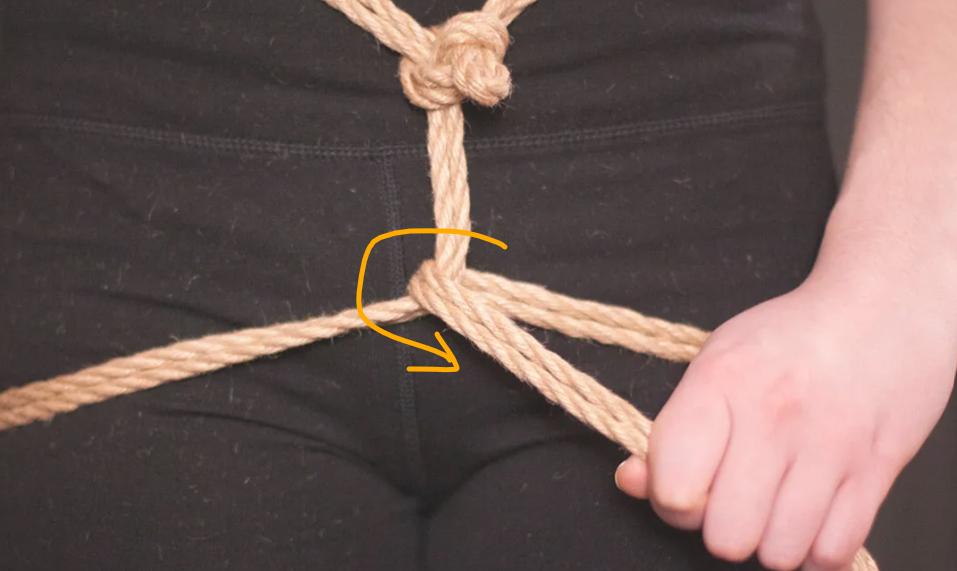
For what?
- Changing direction in a pattern
- Creating parallel lines without a knot
- Transition point between two sections of a binding
Note:This friction requires active tension from the rigger. Once you release the tension, the structure can shift. Do not use it as a final securing.
Half hitch or Hishi Karada
An additional layer of winding on top of the reverse tension. This keeps the friction in place without needing to maintain continuous tension. This is the most commonly used securing in shibari.
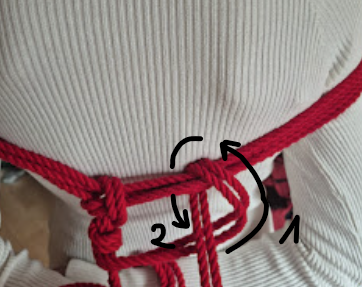
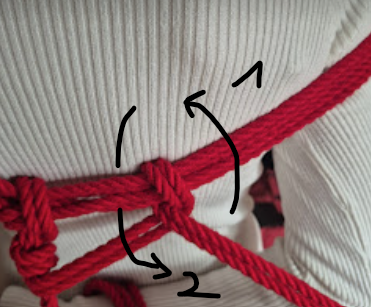
For what?
- Structural securing in between
- Closure of a section
- Basis for building more complex frictions
Stacking:Two half hitches in succession create a double half hitch, which is strong enough to secure a rope to a fixed point. This is the classic 'closing knot' in shibari.
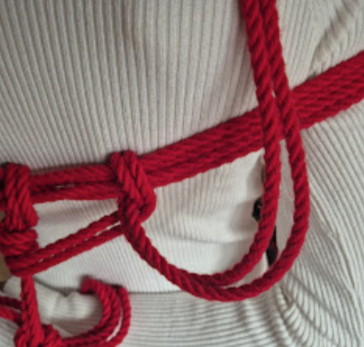
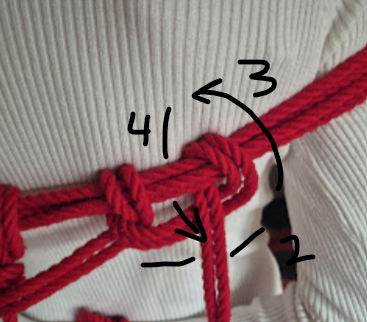
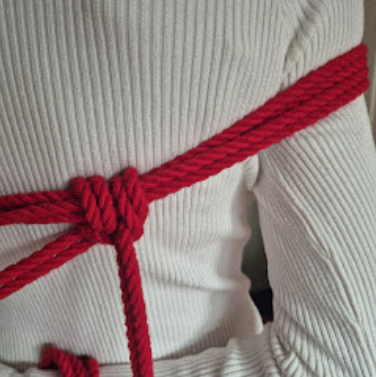
Munter hitch
De munter hitch heeft meer windingen dan de half hitch, wat hem progressief stabieler maakt. De naam is ontleend aan een klimtechniek van Werner Munter. In klimbindingen wordt hij gebruikt om iemand gecontroleerd te laten zakken via wrijving.
Verwarring in de shibari-gemeenschap: Let op, in shibari wordt de naam 'munter hitch' gebruikt naast nodome (crossing hitch).
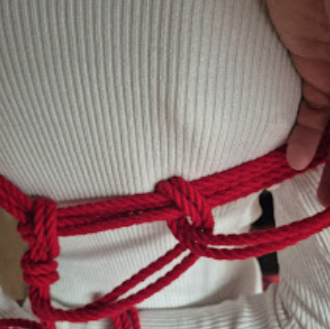
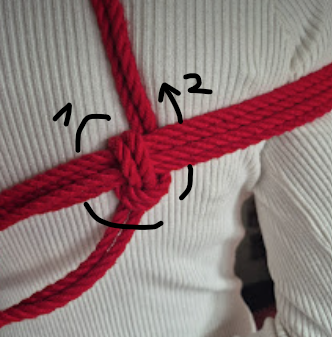
X-friction
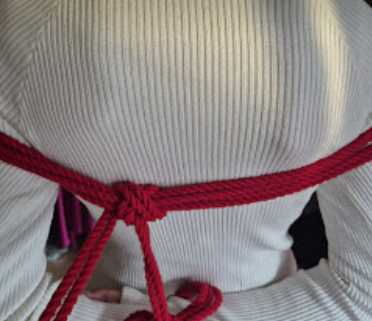
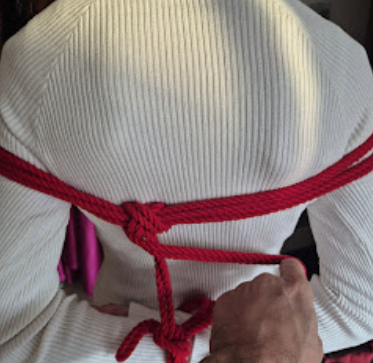
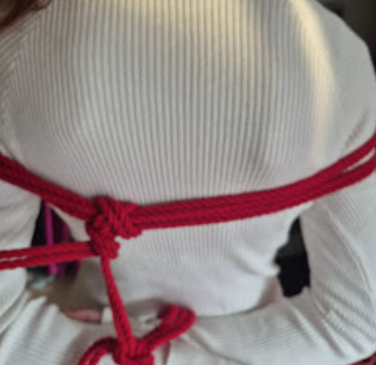
The rope crosses itself in opposite directions. These crossing forces make the X-friction particularly strong. This is a classic, widely applicable securing form in shibari, and one of the most common in harnesses.
Variant 1: starting the rope from the bottom
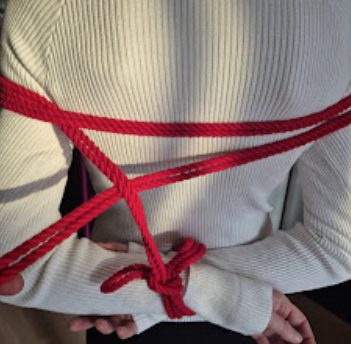
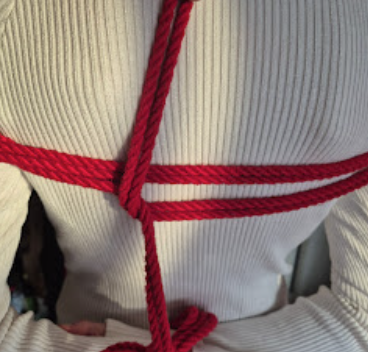
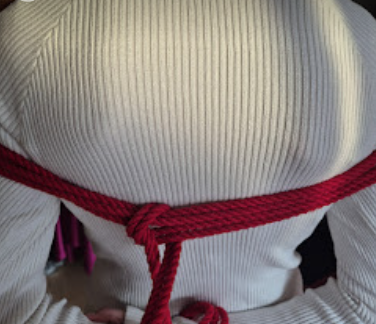
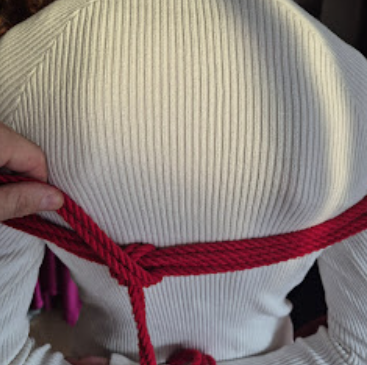
Variant 2: starting the rope from the top:
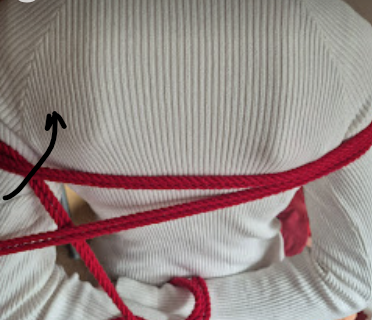
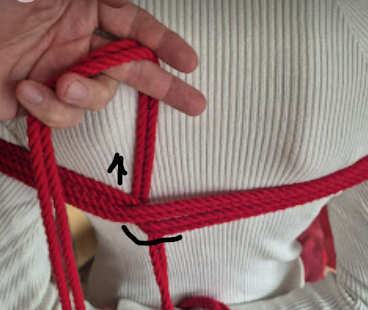
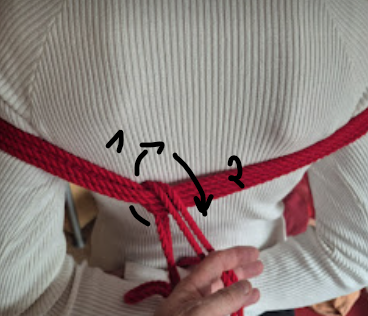
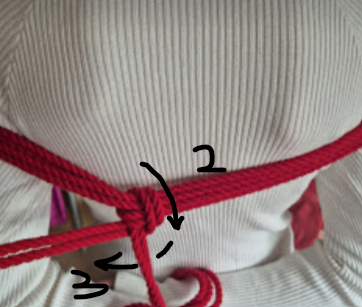
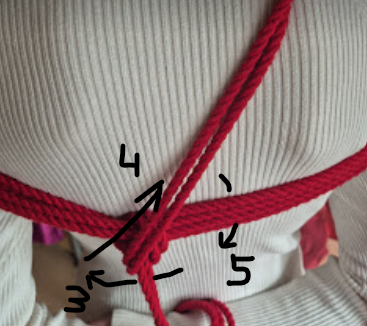
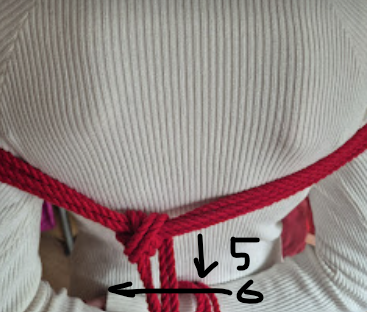
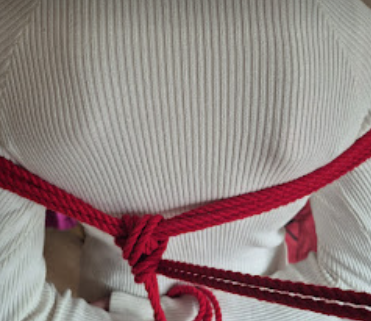
Structure:The X is created by laying the rope over an existing line, going underneath, and coming back on the other side. The friction between the crossed layers secures the tension.
Amount of windings: speed versus stability
More windings = more friction = more robust securing. But also slower and more rope consumption. Fewer windings = fast and smooth, but less reliable under heavy load.
There is no fixed rule. The choice depends on:
- The type of rope (jute and hemp grip more than POSH or cotton)
- The function of friction in the binding
- The expected load or movement
- The atmosphere and pace of the session
Learn the frictions separately first. Once you have them in your hands, start weighing them consciously.
Material and friction
The behavior of a friction is directly dependent on the material.
Jute and hemp:These ropes have a natural grip and work excellently with frictions. Even simple frictions hold well. These are the traditional material choices in shibari.
POSH rope (polyester/nylon):Smoother than natural fiber. Frictions slide more easily, so you generally need more turns for the same stability.
Self-assessment checklist
After practicing, check yourself on the following points:
- There are no unnecessary twists in the rope
- The friction is compact and tightly pulled
- The locking holds without me actively maintaining tension (unless that is the intention)
- The wraps lie flat and parallel
Research questions for the exercise
Use these questions as a guide when experimenting:
- What is the difference in stability between a half hitch and an X-friction under the same load?
- How many turns does your rope need before a friction holds reliably?
- What changes when you reverse the direction of the X?
- How quickly can you tie a friction? How quickly can you untie it?
You don't learn friction from a document, but in your hands. To learn to 'hook' with your fingers, I am referring to the L1 basics course.
Commenting is not enabled on this course.